Brief
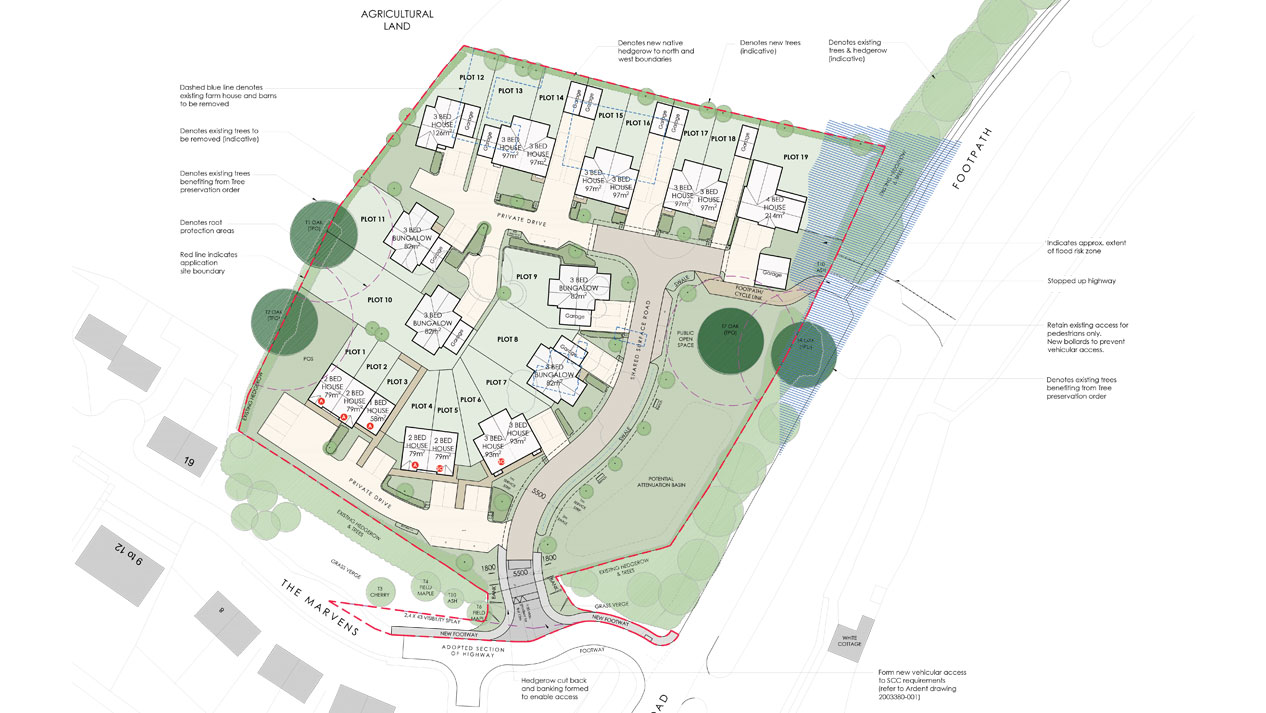
With a strong track record in residential development and planning, our team was asked to regenerate a derelict site and submit a planning application for the delivery of 19 residential units, including affordable housing, whilst also improving community safety and accessibility.
Key client aspirations included addressing antisocial behaviour issues (fly-tipping, fires, and vandalism) and improving road safety with traffic calming and dedicated pedestrian and cycle routes (helping to enhance connectivity and provide sustainable transport options).
Key Info
Location:
Copdock, Suffolk
Project Type:
Planning + Development
Client:
Suffolk County Council – Corporate Services
Disciplines:
Housing + Estates Management; Project Management
Completion Date:
March 2023
Project Value:
£2m
Scope
The development is designed to integrate with the existing Marvens estate, ensuring continuity in character.
Our team’s scope of works included full planning consultancy, liaising with Ardent Consulting Engineers on highways and access, community consultation (to address concerns), and collaborating with Babergh & Mid Suffolk District Council (to meet policy requirements).
Key challenges faced included access and road safety. The original road layout raised concerns about traffic flow, pedestrian safety, and congestion. To address this, Concertus collaborated with Ardent Consulting Engineers to develop a comprehensive transport strategy. This included the implementation of cost-effective traffic calming measures, road narrowing, new pedestrian crossings, and dedicated cycle-friendly routes, ensuring a safer and more efficient road network. Additionally, the site was located outside the settlement boundary which posed a significant hurdle in securing planning approval. To overcome this, the team successfully demonstrated an exceptional need for housing and infrastructure improvements, aligning the development with local planning objectives and securing policy support for its approval. Community concerns regarding parking and congestion were also carefully considered. The initial layout was refined to integrate adequate parking provisions and highway improvements, ensuring the new development would not negatively impact existing residents while enhancing connectivity for future occupants.
This site had previously been plagued by antisocial behaviour, including fires, fly-tipping, and vandalism. To combat this, the development is designed to revitalise the area, replacing the derelict farm buildings with high-quality housing, safe infrastructure, and enhanced public spaces. By introducing proper site management and community-focused improvements, the project aimed to create a safe and welcoming environment for both new and existing residents. The new development will provide a range of facilities including 2- and 3-bedroom houses, a play area and green spaces, pedestrian and cycle links to Copdock Park & Ride, shops, and Suffolk One College (minimising car dependency). A SUDS basin was integrated into the public open space, reducing the need for separate drainage infrastructure. The drainage strategy reduces flood risk and waterlogging.
Ecological constraints were a critical factor in the planning process, with the site supporting protected species such as bats, badgers, and slow worms. To mitigate this, a Biodiversity Net Gain strategy was developed, ensuring the protection of wildlife habitats. It was determined that as part of the application and future development of site, slow worms would be relocated to Belstead Country Park where their population could be better sustained, and additional landscaping measures were introduced to support local biodiversity. A 10% Biodiversity Net Gain enhancement will be achieved through tree planting, hedgerows, and habitat improvements.
Imagery


Result
We secured outline planning permission for 19 homes, which will transform a neglected and derelict site into a safe and thriving community.
The team’s problem-solving skills, structured solutions, and collaborative and proactive approach led to a successful planning application submission, with a positive result or granted development which addressed housing, transport, and community concerns. By replacing the abandoned farm buildings, which had become a hotspot for antisocial behaviour, the development brings new life and purpose to the area while addressing long-standing safety concerns.
An essential part of the project’s success was its strong stakeholder engagement. By working closely with local authorities, engineers, and the community, the design was refined to address key concerns, ensuring that the development not only met housing needs but also improved quality of life for both new and existing residents.